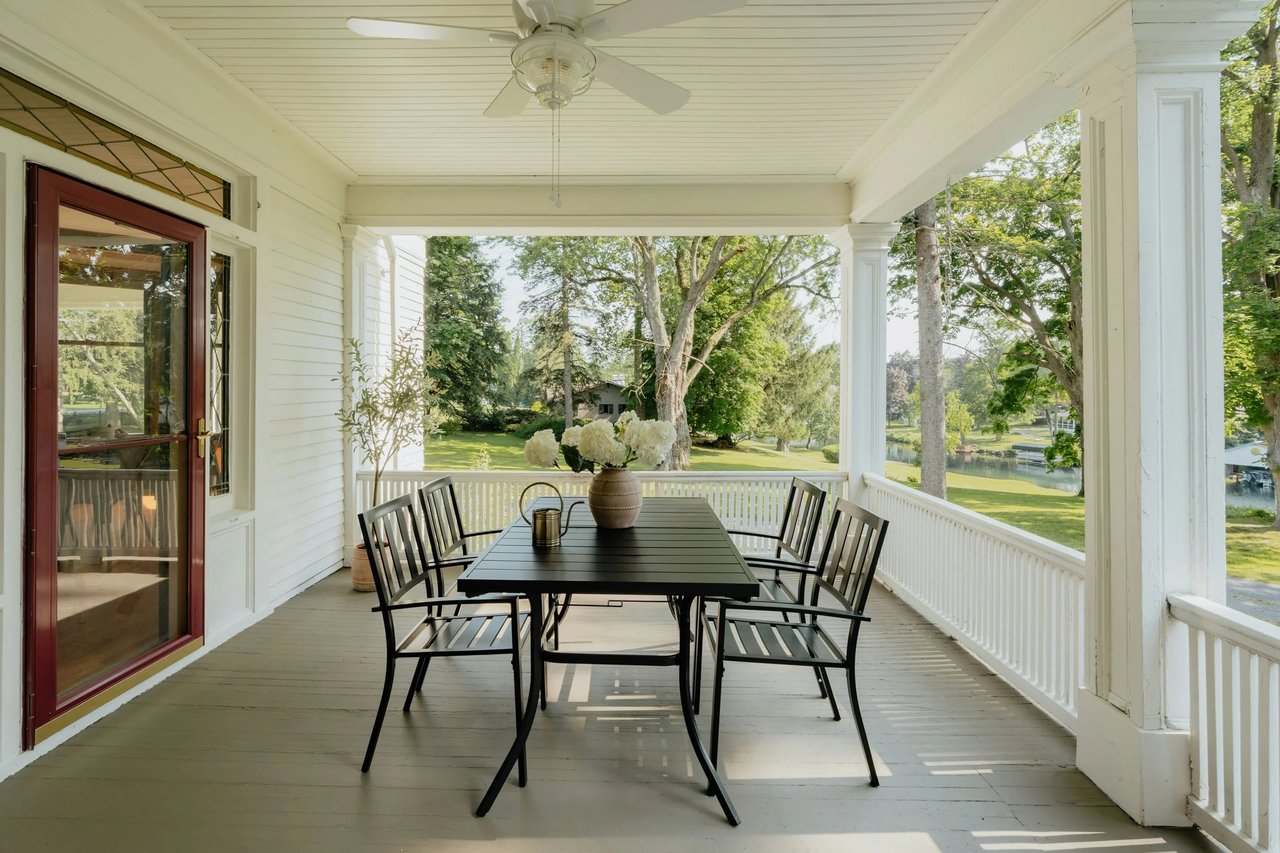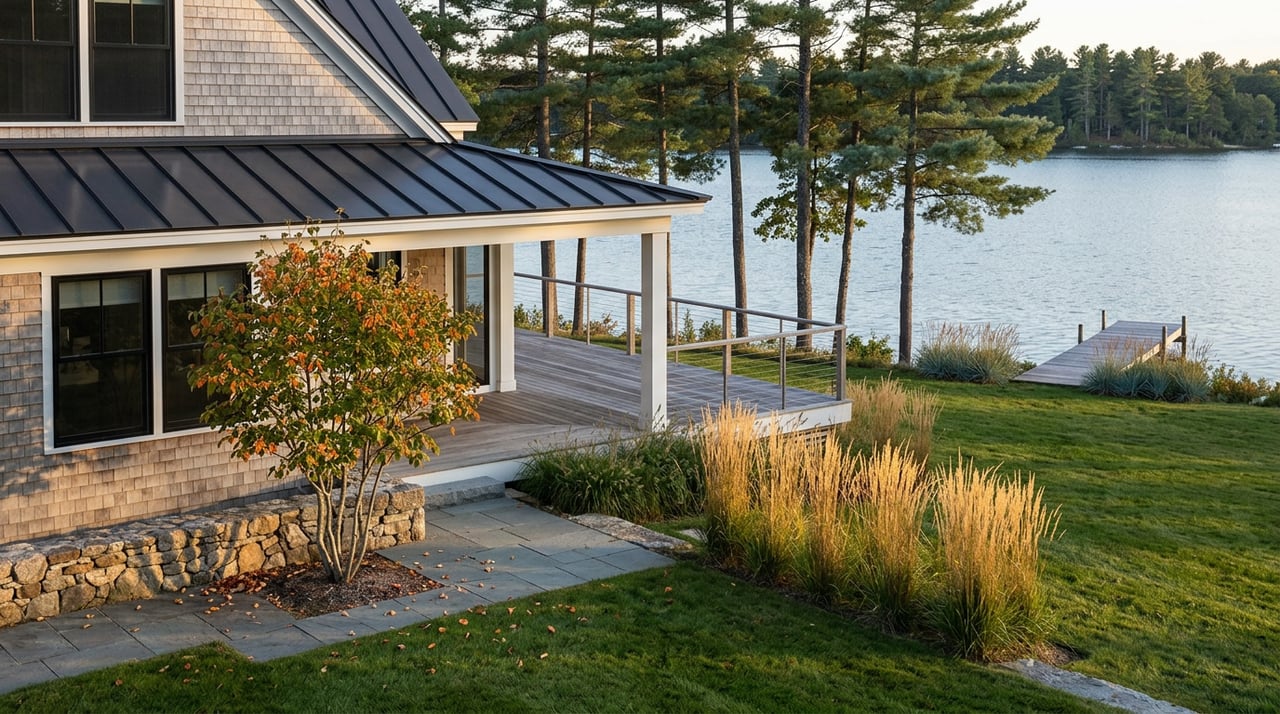
Stand on the Blue Star Highway bridge between Saugatuck and Douglas and you are standing between two different theories of how a vacation-rental town should work. Look toward Saugatuck and you're looking at a city that caps short-term rentals by district and runs a license lottery when a district fills. Look toward Douglas and you're looking at a city that never built a cap at all. Same river, same lake, same buyer pool from Chicago and Grand Rapids. Two completely different rulebooks a few hundred yards apart.
For an investor comparing the two towns, the instinct is obvious: Douglas looks like the easier buy. No waiting list. No license that dies with its holder. Just paperwork. The instinct is right about the paperwork and wrong about what that paperwork actually means for a return on investment. The numbers that describe what a Douglas short-term rental actually earns tell a different story than the ordinance does, and the two need to be read together before an offer goes in.
What Douglas Actually Requires
Douglas's short-term rental rule sits in Section 16.33 of the city code, and it is short. A short-term rental unit, defined in Section 2.20 as a dwelling rented for less than 31 consecutive days, is permitted in every zoning district where residential use is permitted. There is no separate STR zoning overlay, no per-district ceiling, and no lottery. The entry mechanism is a registration process, laid out in the city's own short-term rental packet, and it comes down to four things:
- The owner registers the unit with the City of Douglas and obtains a rental occupancy permit before any rental activity occurs.
- The unit has to meet building, health, and fire codes at all times and gets inspected by the Fire Department at least once every 36 months before a rental occupancy certificate is issued.
- Inspection procedures and fees are set jointly by the City Council and the Saugatuck Township District Fire Department, since Douglas shares fire coverage with its neighbor.
- More than one substantiated code violation in a calendar year can get the occupancy certificate revoked, with a ten-day window to appeal to the City Council.
That's the whole gate. No cap on the number of licenses issued, no waiting list tied to a district hitting capacity, no license that has to be re-won if the property changes hands. It's a registration system with a fire inspection attached, not a scarcity system.
Why This Reads as an Advantage, and Why It Isn't the Whole Story
Compare that to Saugatuck, where the short-term rental program runs through Section 99.57 of the city code and is structured around districts that can fill up. A license there is tied to the person holding it rather than the property itself, so buying into a district that's already at capacity means entering something closer to a waiting list than a paperwork queue. Saugatuck built scarcity into its ordinance on purpose.
Douglas didn't build scarcity in at all. On paper, that looks like the friendlier market for an investor who wants a straightforward path from closing to first guest. But scarcity in a licensing system does something for revenue that an open system can't replicate: it caps how much new inventory can compete for the same guest demand. Saugatuck's cap protects existing STR owners from a flood of new competitors entering the same few blocks. Douglas has no such floor under it. Anyone with a code-compliant house in a residential zone can register and start renting, which means the town's short-term rental supply grows with the market rather than against a ceiling.
| Douglas | Saugatuck | |
|---|---|---|
| Entry mechanism | Registration + occupancy permit | License application, subject to district capacity |
| Cap on total licenses | None | Yes, by district |
| License tied to | The registered unit | The individual license holder |
| Inspection cycle | Fire Department, at least every 36 months | Standards set under Section 99.57 |
What the Occupancy Numbers Actually Say
This is where the ordinance stops telling the full story and the performance data takes over. Over the trailing twelve months through July 2026, short-term rental data for Douglas puts occupancy at 34.1 percent, revenue per available night at roughly $162, and average annual revenue per listing at about $35,017. That revenue figure is down 18.3 percent compared to the year before.
Read those three numbers together and a pattern shows up that the "no cap" story doesn't mention. An occupancy rate in the mid-30s means a Douglas short-term rental sits empty roughly two nights out of three across the year. That's not unusual for a seasonal lakeshore market, but it's a meaningful number to run against a mortgage payment before assuming a property will carry itself. And an 18.3 percent year-over-year revenue decline in an uncapped market is exactly what you'd expect if new listings keep entering a fixed pool of summer demand. Nobody's turning away new supply at the city level, so the supply keeps growing until occupancy and nightly rates absorb the difference.
Saugatuck's cap doesn't guarantee a better return, and nothing in this research measures Saugatuck's own occupancy numbers directly. What the cap does is put a ceiling on how much new competition can enter the same guest pool. Douglas doesn't have that ceiling, and the revenue trend looks like a market where supply has been able to grow faster than demand.
The Other Number That Changes the Math
None of this would matter much if Douglas home prices were priced for a softening rental market. They aren't, at least not yet. As of September 2026, homes listed for sale in Douglas carried a median list price around $759,000, with price per square foot down roughly 8 to 9 percent compared to the same month a year earlier, and a median of 114 days on market before going under contract.
That combination is worth sitting with. Prices per square foot are cooling, which usually signals a market where sellers are adjusting expectations. But the median list price itself is still well above what most Michigan lakeshore markets carry, and a property sitting on the market for 114 days is not a property that's flying off the shelf at that number. If a buyer is underwriting a Douglas purchase partly on short-term rental income, the math has to start with the actual occupancy and revenue figures above, not with the assumption that an uncapped, easy-to-register market automatically produces strong cash flow. At roughly $35,000 in average annual revenue against a $750,000-plus purchase price, the property needs to work hard as a personal retreat and a lifestyle asset to justify the number, because the short-term rental income alone isn't going to carry it the way it might in a market with tighter supply and stronger occupancy.
What This Means If You're Comparing the Two Towns
The honest version of this comparison isn't "Douglas is easier so Douglas wins" or "Saugatuck is scarce so Saugatuck wins." It's that the two ordinances create two different kinds of risk, and a buyer needs to know which risk they're underwriting. In Saugatuck, the risk is regulatory: can you get a license in the district you want, and what happens to that license if you ever sell. In Douglas, the risk is competitive: the door stays open for you, but it stays open for everyone else too, and the occupancy and revenue trend over the past year reflects that.
Neither risk is a reason to avoid either town. Both are still genuinely appealing places to own a lakeshore property, whether the plan is a short-term rental, a part-time home, or eventually both. But the paperwork story and the revenue story are two separate questions, and running only one of them before making an offer leaves half the picture out.
A Few Straight Answers
Does Douglas require a special STR zoning permit? No. Short-term rentals are permitted in any zoning district where residential use is already allowed, so there's no separate rezoning or overlay process to clear.
How often does a Douglas short-term rental get inspected? At least once every 36 months by the Fire Department, as a condition of keeping the rental occupancy certificate valid.
Can a Douglas STR license get revoked? Yes. More than one substantiated code violation in a calendar year can lead to revocation of the rental occupancy certificate, with a ten-day window to file an appeal with the City Council.
Does no cap mean guaranteed approval? It means no waiting list and no competition for a limited number of slots. It doesn't override the building, health, and fire code requirements every registered unit still has to meet.
If you're weighing a Douglas purchase against Saugatuck, or trying to figure out what a specific property's short-term rental ceiling actually looks like once occupancy and seasonality are factored in, that's exactly the kind of number-by-number conversation worth having before you write an offer. David Isljamovski works this stretch of the lakeshore every day and can walk through what a specific address is likely to earn, not just what it's legally allowed to do. Let's Connect.